ARCHEOLOGY | 11.02.2009
Report: Germans Deceived Egyptians Into Exporting Nefertiti Bust

Details of the document, which could prompt calls from Egypt for a return of the 3,400-year-figure of the Pharaonic queen, hailed as the world's most beautiful woman were revealed by German newsmagazine Der Spiegel.
The document, discovered in the archives of the German Oriental Society, indicates that Ludwig Borchardt, the archaeologist who discovered the bust in 1912, deliberately withheld its true value from Egyptian authorities.
Written in 1924, it recounts a meeting held on Jan. 20, 1913 between Borchardt and Egypt's chief antiquities inspector Gustave Lefebvre to divide the treasures found in archaeological digs.
Hidden value
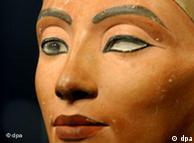 The archaeologist reportedly wanted to keep the bust for Germany
According to the document, penned by the secretary of the German Oriental Company who was present at the meeting, "Borchardt wanted to save the bust for us," Der Spiegel said.
To achieve this goal the bust was tightly wrapped and placed at the bottom of a box in a poorly lit room where Lefebvre was examining artifacts discovered during the excavation.
According to the witness, Borchardt presented an unflattering photograph of the bust. He also said it was made of gypsum, which is of little value, when in fact Nefertiti was painted on limestone.
This apparent deception resulted in official permission for the bust to be exported to Germany where it is now seen by hundreds of thousands of visitors every year at Berlin's Egyptian Museum.
Egypt still wants bust back
 Nefertiti is said to have been the most beautiful woman in the world
The secretary general of Egypt's Supreme Council of Antiquities said Wednesday, Feb. 11, that he wanted to see the document and may pursue legal, political, diplomatic channels to get the bust back.
"If reports are true and such document exists we will start taking strong action," Zahi Hawwas told the dpa news agency in Cairo. "The revelation, if true, is great news that will certainly back our case."
Hawass has previously said Borchardt covered the bust in mud to disguise its real worth.
Nefertiti was the chief wife of Pharaoh Akhenaten who ruled about 1350 BC.
Center of dispute
The bust has been a subject of dispute between Germany and Egypt for years, with Berlin refusing to allow it to travel to Cairo for the opening of Egypt's National Museum in 2011.
The bust was initially kept in the Berlin home of James Simon, the German merchant and patron of the arts who funded the dig at Amarna, 150 kilometers (93 miles) out of Cairo.
Simon later donated it to the state, which put it on public display in 1924. It has graced various museums since, accompanied by repeated calls from Egypt for it to be returned.
Germany, starting with the Adolph Hitler's Nazi regime, have refused Egyptian requests to return the bust, insisting that their legal ownership of the bust is beyond question.
"We are not worried about having to return Nefertiti because the division of the objects from the dig was perfectly legal," said a spokeswoman for the Prussian Cultural Heritage Foundation, the administrative organization for Berlin's state-run museums.
Nefertiti is set to obtain a new home at the end of February when the Egyptian collection moves to the nearby Neues Museum after its renovation.


Comments