Turkey | 24.08.2007
German-Turkish Politician: Gül is Good for Europe, Turkey
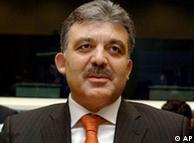
European Parliament member Cem Özdemir spoke with DW-WORLD.DE about the challenges that face Abdullah Gül, who is likely to become Turkey's next president, and what will top the presidential agenda if he's elected.
DW-WORLD.DE: After Gül's AKP (Justice and Development) party won a clear victory in the early parliamentary elections in July, it appears fairly certain that Gül will be elected president by Aug. 28 at the latest. He has promised to protect democracy and the constitutional separation of church and state in Turkey. Are his claims credible?
Cem Özdemir: One just has to look at the last four and a half years of the AKP administration. They have not contributed to a fundamentalization of the Turkish society -- just the opposite. The Turkish society has opened up like never before in its history.
So many reforms have taken place, such as in the areas of democracy and women's rights. It's common knowledge that some people are distrustful of Gül and now it's in his hands -- should he be elected -- to break down this mistrust.
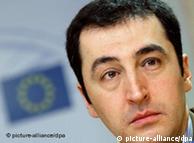 Bildunterschrift: Großansicht des Bildes mit der Bildunterschrift: Cem Özdemir is a German politician of Turkish origin
Is the criticism warranted?
It generally has to do with the headscarf issue among women. But Gül is right in pointing out that his wife [who wears a headscarf] isn't running for president, he is. What the opposition leader Deniz Baykal said is also true, even if he unfortunately doesn't stick to it himself: "It's not important what she has on her head, but in her head."
So far, neither women nor Mr. Gül have had reason to be seen as radical fundamentalists. That can't necessarily be said about any of the opposition politicians. Gül stands for a liberal opening of Turkey. Those who want to stop him stand for ultra-nationalism.
As foreign minister, he was actively involved in negotiations over Turkey's accession to the European Union. How is Gül viewed in Europe?
He is very highly regarded by European politicians, such as Enlargement Commissioner Olli Rehn, German Foreign Minister Frank-Walter Steinmeier or his predecessor Joschka Fischer. [Gül] is seen as a reliable partner with whom one can reach agreements that the other side will stick to as well. In this respect, one can say that Gül is confronted with less distrust abroad than in his own country.
What would Gül's election mean for Turkey's EU ambitions?
It would make many things easier. You can't forget that the incumbent Sezer has blocked many important reforms in Turkey, like the Law on Foundations, which has particularly disadvantaged Christian and Jewish foundations there. The AKP government wanted to put an end to this, but it was blocked by the opposition and the president didn't sign the law.
Also, important initiatives in the reforming the bureaucracy, postponing retirement age and restructuring the budget were also blocked by the president. If a president like Gül, who is more open to reform, came along now it would make the situation easier for the government.
 Bildunterschrift: Großansicht des Bildes mit der Bildunterschrift: Özdemir: Gül should show the women without headscarves that his wife's isn't a sign
A major point of criticism concerning Turkey's possible accession to the EU is always the issue of human rights. Will changes be made in this area as well?
I knew Gül way back when he was in the fundamentalist opposition party, which he tried to reform before he left it. During that time, I often came to him with criticism from human rights organizations. I also always asked these organizations about Gül.
My impression was that they'd found a partner in Gül who would always listen and take their concerns seriously -- even when he couldn't do anything about them due to the constraints he faced and the problems that Turkey had then and still has now. I believe that Gül is someone who stands for reform in the area of human rights.
Do you support Gül for president?
I not only think that he is good for Europe, I also believe that he's good for Turkey.
However, the fears that exist have to be taken seriously by Gül and his party. They can best be defused by proving that they're unjustified.
There are two important groups that Gül has to pay attention to: The first is the women who don't wear headscarves. Gül has to show them that his wife's headscarf isn't a sign. On the contrary, it shows that diversity must be accepted. The other group that's waiting for a signal is the Alevis, a religious minority in Turkey. It's important for Gül to show them that the president is also an Alevi.
Cem Özdemir is a German politician of Turkish origin and has been a member of the European Parliament since 2004. He belongs to the party "The Greens / Free European Alliance."


Comments